Fishin Frenzy: what a beginner's first mistake actually costs
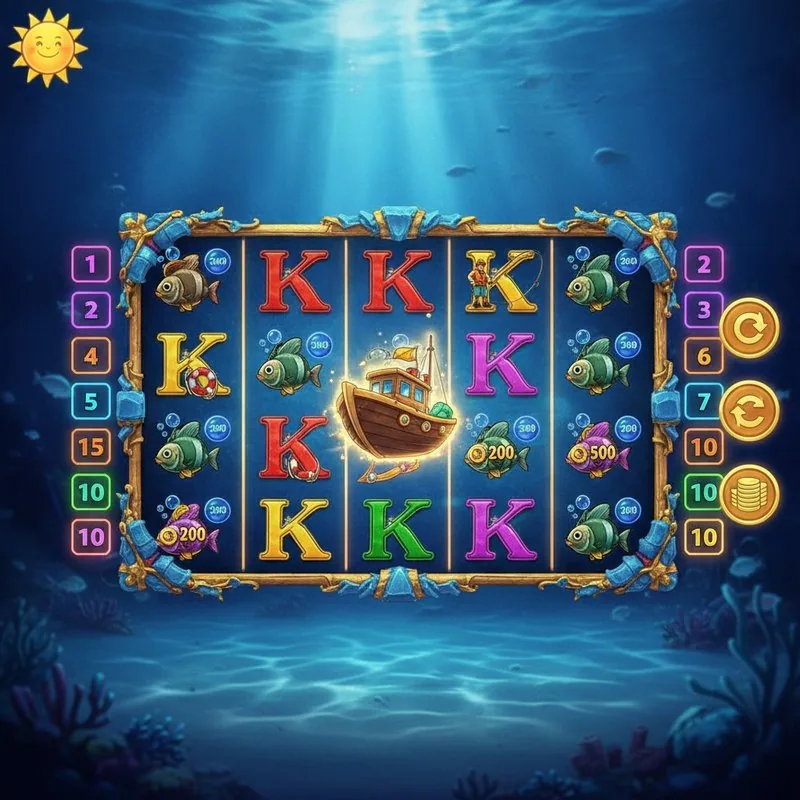
The most expensive thing in Fishin Frenzy is rarely the reels. It is the moment, four minutes in, when the free spins have still not landed and you decide your opening stake was too timid. You raise it. Then you raise it again. When the feature finally arrives it pays a perfectly ordinary amount against a stake three times the size of the one you planned, and it does not come close to repairing the session.
Almost every complaint about this game traces back to a decision made before the first spin or in the gap between two of them. So this page is organised around the mistakes rather than the marketing: what the round actually does with your money, where the multiplier growth comes from, why the losing runs are longer than the screenshots suggest, and how the UK rules around stake, deposit limits and verification shape a session before you ever press spin.
The stake is where it goes wrong, almost every time
Ask around and the same story comes back. A player opens at £0.20, watches twenty spins return nothing, and concludes the game is «cold» at that level. Up goes the stake to £1.00, then £2.00. By the time the feature lands, the earlier losses have grown faster than the payout can chase them. The maths did not change between those spins — only the size of the hole.
- Raising the stake to force a feature. The odds per spin stay put; the loss per spin does not.
- Treating the base game as dead time. Most of the money returned to players comes back outside the feature, not inside it.
- Starting on a version whose paytable you have not opened. The layout looks familiar, the symbol values do not have to be.
- Using demo play as a warm-up for a stake you would not normally set. A free balance teaches nothing about the cost of a real dry spell.
- Spending a month's budget in one evening because the game «owed» you a round.
Between your stake and the collect: what the round is doing
The structure is a reel slot with a fishing theme and a collecting mechanic. You set a stake, spin, and winning combinations pay according to the paytable for that particular version. Special symbols do the rest: one type triggers the free-spins feature when enough of them appear, and a collector symbol gathers the values that build up on the reels during that feature. The collected total is what pays when the feature ends, which is why the feature feels so different from the base game — during those spins you are not pressing anything, you are watching a number accumulate.
- Open the information or paytable screen first and read the symbol values, the feature trigger and the stake table for this version.
- Set the stake within the UK cap and leave it there for the session. Decide the figure before the first spin, not after the tenth.
- Spin manually if you want to watch the base game, or set auto-spin with a stop condition on losses and on a single win.
- Watch for the trigger symbols. Nothing you do during the feature changes its outcome — the spins play out on their own.
- When the feature closes, the collected total is credited. That is the moment to stop and look at the balance, not to spin again immediately.
- Withdraw what you intended to withdraw. The first withdrawal is the slow one, for reasons covered further down.
Multipliers, return to player, and the runs where nothing lands
The multiplier in this game is not a mood, it is an accumulator. Values gather during the feature and the total is settled at the end, so a feature that looks weak for eight spins can still close well. The reverse is just as true, and the reverse is what catches people: a strong-looking start tempts a larger stake on the next round, which is exactly the moment the session stops being planned.
Return to player is a long-run figure, calculated across millions of spins and printed in the game information panel. It tells you what proportion of all staked money comes back over that enormous sample. It does not tell you what tonight returns, and separate versions of a game can carry different figures, which is one reason to read the panel rather than a review. Volatility is the other half of the picture: a high-volatility slot pays less often and in larger chunks, so losing sequences of twenty or thirty spins are part of the design rather than evidence of a fault.
| What you see | What it actually means |
|---|---|
| A return-to-player figure in the info panel | A long-run average, not a promise for your session |
| Long stretches without a win | Normal for high volatility; the feature carries much of the return |
| A big feature after a bad hour | Coincidence. Each spin is independent of the last |
| Screenshots of huge multiplier totals | Survivors. The losing sessions do not get posted |
The £5.00 ceiling, the £2.00 tier and the checks behind them
British players get a hard ceiling that most of the world does not: slot stakes are capped at £5.00 per spin, and at £2.00 for anyone aged 18 to 24. That second tier exists because younger players lose money faster, and it applies whether or not you feel it should. If a game screen will not let you set the stake you wanted, this is usually why — not a glitch, and not a reason to look for a site that ignores it.
- Deposit limits are mandatory on licensed sites. Set one before your first deposit, not after a bad night.
- Affordability checks begin at £150.00 of net deposits in a month, with credit-reference data used at the first stage.
- Credit cards have been banned for gambling since 2020. The payment method must be in your own name.
- Age and identity checks run before you can deposit; documents are requested before the first withdrawal.
- GAMSTOP is the single registration that blocks every licensed UK site for between six months and five years, and BeGambleAware is where the rest of the help lives.
On a phone, in a browser, and in free play
The game is built to run in a mobile browser without a download, and it holds up on a small screen: the reels scale down, the stake panel stays reachable with a thumb, and the paytable remains readable through the information button. Licensed UK operators also ship real-money gambling apps through both the Google Play and App Store, and where an operator has one, this game usually travels inside it. If a site asks you to sideload a package file from somewhere other than an official store, close the tab.
Free play is common on licensed sites, but plenty of them only show the demo to logged-in, age-verified accounts. That is worth knowing before you go looking for a free version and end up on an unlicensed page instead. The demo runs the same maths as the paid game against a pretend balance, which makes it genuinely useful for learning the feature and genuinely useless for learning what a losing run costs.
| Where you play | What you get | |
|---|---|---|
| Demo behind a login | Same reels and feature, pretend balance, no withdrawal | → |
| Real money in a browser | Real stake, real payout, full verification | → |
| Operator app | Same game, real money, notifications you may want to switch off | → |
FAQ
Can I make the free spins land sooner by spinning faster or leaving auto-spin on?
No. Every spin is an independent draw from the random number generator, and the speed of your pressing does not feed into it. Auto-spin and manual play carry identical odds; the only difference is how much you spend per minute while the reels turn. A dry run of thirty spins is ordinary at this volatility, not a signal that a feature is due.
Is the free version the same game as the one played for money?
The reels, the feature and the paytable are the same, so the demo is a fair way to learn the round. What it cannot show you is the cost of variance against real money, because a pretend balance never runs out at an inconvenient moment. On many licensed UK sites the demo is only shown to logged-in, age-verified accounts, so you may need an account before you can open it.
Why did my first withdrawal take longer than the payment times suggested?
Because the advertised times start after verification, not after you press withdraw. Age and identity checks happen before your first deposit, but proof of address or source of funds is usually requested before the first payout, and 24 to 48 hours for that stage is normal. Once it clears, the method decides the rest: e-wallets within a few hours to a day, Faster Payments to a bank from same day to two working days, debit card in one to three.